-
New Year Test
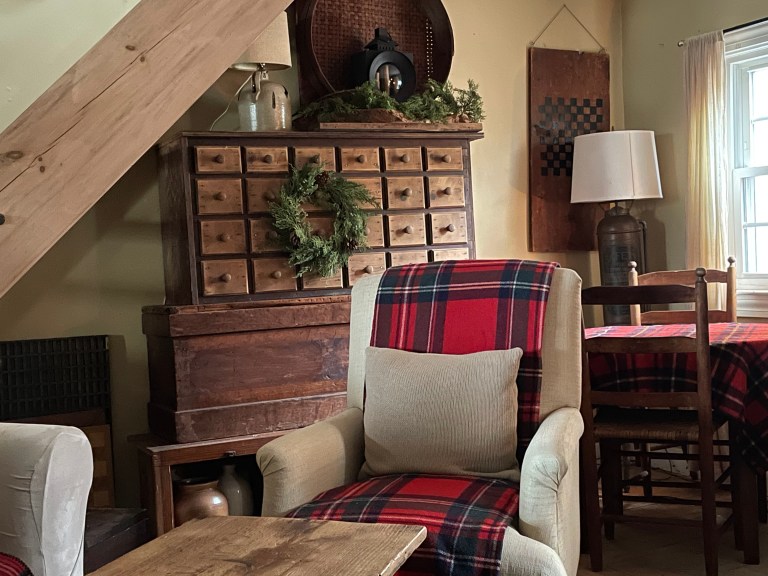
Yes, this is a test as I refamiliarize myself with the CMS for this site. After exploring I will delete the post.
This is just a photo of the Living Room.
-
10 Tips to Know if an Antique Mall is Right For You

Recently I mentioned that I am always on the lookout for prime locations for new shop space. Today I want to discuss what to look for when you, as an aspiring Antique Vendor, are scoping out space in an Antique Mall.
Of all the business models I’ve experimented with, I tend to like the Antique Mall (sometimes called a Group Shop) best. But how does one choose? Here’s what I look for when searching for a new home for my Vendor space.
Antique Shop Owner
I look for a like-minded person who conveys an aura of hospitality. After all, this isn’t just junk. I offer unique artifacts used to create a warm and inviting atmosphere in someone’s home. I look for friendliness, creativity, and enthusiasm. Does the shopkeeper love what she does? Does she appreciate and see the charm of these rusty items, or does she just see a pile of junk for sale? Is the owner hard working?
The owner should be the face of the business, not an absentee landlord. Is she dependable, is she open when she says she’s going to be open? Are the shop hours sufficient to capture impulse shoppers and regulars alike? Is she savvy, fair and trustworthy in business dealings with vendors and customers?
Antique Mall Location
If an antique shop is a destination unto itself, it can reside in the woods, far up a back road. But most shops benefit from high visibility to get their customer traffic. Does the shop you occupy have high visibility and a pleasant outside aesthetic? Does the building have curb appeal? How about adequate parking for vendors to load and unload product, and plenty of space for customers, so they aren’t intimidated by the lack of parking spaces, and keep on driving to another shop a few miles up the road.
Proximity to Home
Ideally your shop space is close enough to home that you can service your space one or two times a week. By that I mean, replenish stock that has left a gaping hole in your displays, or remove an item that has simply taken up space for the past month, with little or no interest from buyers. Sometime it may be to simply “Fluff it up”, because you were driving by.
 You may choose to have more than one antique shop. Presently I have one space 20 minutes from home, and I have another one a half-hour in the opposite direction. This is very manageable, though it would be ideal if they were in the same direction, because I could hit them both in the same day.
There have been times when the ideal store for me has been over an hour drive from home. When business is booming, this is OK, but if business is marginal, a two-hour round trip, gasoline, tolls and more can quickly make the situation intolerable.
Vendor Churn
Visit the shop several times. Observe how many empty spaces there are. How many booths are offering steep discounts, or moving sales? If that number is high, that is not good. Is there a waiting list to get space? If so, that may be a good sign. It means people aren’t eager to leave. Are a disproportionate number of the booths occupied by the owner? If so, it might mean that they can’t satisfy enough vendors to keep them in the shop.
Customer Traffic
We already addressed automotive traffic in the previous section, but what about customer traffic? Is the parking lot always empty when you drive by? When you stop in the store to look around, are you the only customer in the store for 20-30 minutes? If so, beware. The more eyeballs that see your stuff, the better chance you have of selling. If no one’s there, no one’s buying. If you see customers, observe whether they buy, or simply kick the tires and walk out empty-handed.
Days and Hours Open for Business
How many days a week a this antique mall is open for business can vary. Is the shop open on weekends? What time does it open? If it only opens at noon, that might be problematic. Does the shopkeeper view this as a real business (moving inventory and profitability), or is it a hobby (labor of love and a social outlet). I would suggest you don’t want to bet your bottom line with a hobbyist.
In recent years I’ve observed some shop owners strive to create a sense of scarcity, being open only one weekend a month. Yes, two days only. These are marketed as “events”. Such a business model does tend to stimulate a great deal of traffic and shopping activity in a short period of time. However, if you wish to participate in such a venture, there is a great deal of work involved in getting all your product to the shop for two days, and then removing it all to bring back to your own storage for the next 28 days.
Web & Social Media Presence
The olden days of advertising in a monthly regional antique/collectible dealer newspaper are history. Yes, some still exist, but they are expensive, and they are seldom timely. Does your antique mall still send expensive post cards to your mailbox to stick on your fridge to remind you of the big event on Black Friday? Does your shop owner have an e-mail list? Even better – does the shop owner allow you to collect e-mail subscribers within your own booth?
Good shops have a professional Facebook page and manage it daily to keep readers interested in the new arrival of products, and to constantly remind shoppers that cool stuff is “hit or miss”, so you gotta keep on top of things for fear of missing out (FOMO). In addition to Facebook, better shops have their own website, and their own domain. And the best shops use Facebook and their webpage in concert with professional e-mail reminders of special events and to create a tribe of savvy shoppers, who get the news first on new arrivals.
Price Points & Customer Demographics
Some markets cater to a higher-end clientele that have no issue with paying premium pricing. Other markets prefer moderate/fair pricing. Others, are just plain cheap, avoid these at all costs. If a shop is perceived as simply an indoor flea market or yard sale – run! These shoppers place no value on what you have, all they want to do is deal. I could include links to sites or Facebook pages that would illustrate each of these scenarios, but I don’t want the negativity.
Often times this is less a matter of geography and more of a mindset conveyed by the shopkeeper. Which leads to my next point.
Beware of the “Sale Mentality”
Some shop owners think having a “Sale” is the way to drive business. They are eager to promote “Sales” to get buyers into the door, to buy your stuff at a discount. But the shop owner is still getting full price on the rent from all the vendors. Some even expect vendors to be on site to help “man the store”. If you pay rent, then have to discount your products, bake cookies and work at the counter, then I have a cheaper business model for you. Put your stuff on the curb with a “Free Stuff” sign on it. It will be much less work, for the same profit.
Similar Design Aesthetics
If you step into a shop and the booths all look just a little too similar, odds are that the owner is occupying most of the space. If the booths vary in the types of collections and presentations, then this visual diversity suggests many creative vendors are present.
Either way, you want to be in a space with similar quality merchandise. You want variety, yet similar. You want to see merchandise that is clean, gently worn to show its age and character, yet serviceable or displayable.
Summary
There you have it. 10 tips about what I look for when I’m scouting out new antique shop space. These are not hard and fast rules, but they are guidelines that will give you a starting point when you begin exploring antique mall alternatives in your area.
If you have any additional ideas to share, please add them to the comments section below.
If you like this photo and story, please share it with your friends with any of the buttons below.
-
Iron Skillet Treasures
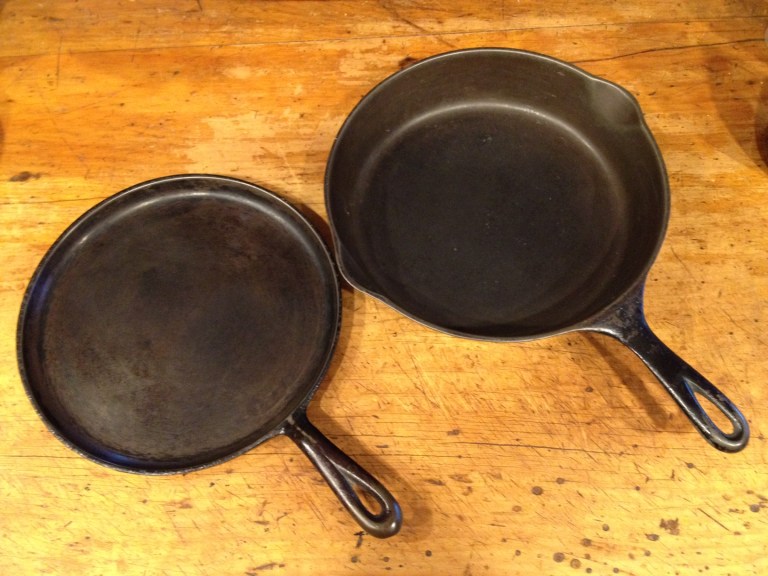
Sometimes Old is New
Many of the stories I post are about repurposing old things for new uses. But in this case, an old iron skillet, is a skillet, is a skillet. Today’s post is about cherishing an old cast off, for it’s original purpose, and putting back into daily service.
Charles loves old iron cookware. Every Sunday, he prepares me a steak dinner. And this is how he does it, on a white hot iron skillet.

It must be Sunday evening, there’s a two-pound farm fresh Ribeye on the table He uses a 12-inch iron skillet we rescued a year ago. We were able to restore it with steel wool, kosher salt, oil and elbow grease.
These vessels are becoming the go-to tool for so many things in our kitchen, not just steak and burgers.
The beauty of old iron is it’s strength and durability. You can stir fry a bunch of veggies, then throw in a half dozen whipped eggs, and place the skillet in the oven for fifteen minutes, and you have a lovely frittata for dinner. All in one, easy to clean pan.
More Iron Skillets
This past week, I was helping a neighbor clean out their parents’ house. I offered to take a bunch of stuff to the dump for them, since I was already making a trip for our own stuff.
I filled most of my car with their stuff, boxes and boxes of stuff. One box seemed particularly heavy. As I peeked inside I saw these two beautifully seasoned skillets. I saved them from getting tossed in the scrap metal pile, which would have been a tragic end for these fine pieces.
Charles better get up early before going to the gym on Saturday, because I’m feeling the urge for pancakes coming on. I think I can convince him. It’s forecast to be very frigid, and he needs to increase his carb intake before Saturday’s training session. At least that’s the way I’m going to position it when I suggest it this evening.
-
Goose Decoys
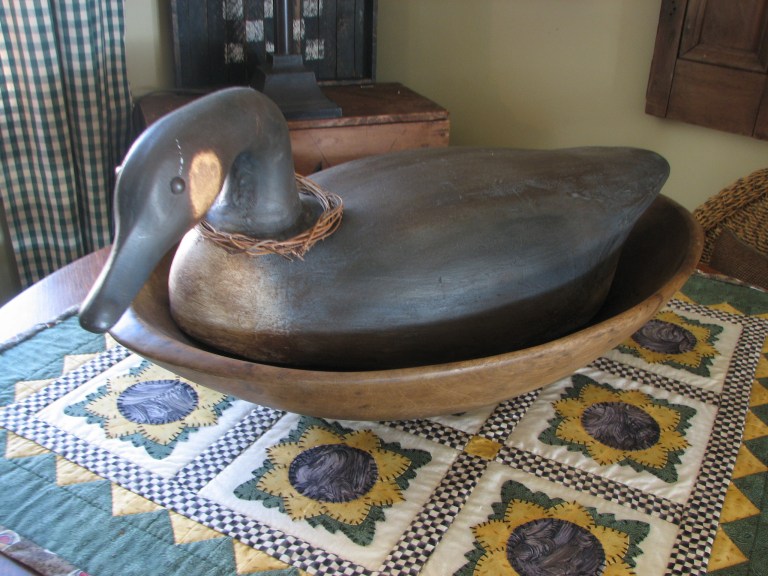
Suzanne’s Cottage is surrounded by a great deal of wildlife, particularly waterfowl. So we love to decorate with decoys. They are mostly geese and swans decoys.
Being on a pond, I love decorating with things that suggest “pond life”, such as fishing paraphernalia, decoys, snow shoes, and more.
More Decoys
I am constantly on the lookout for ducks, geese and swan decoys. Some are wood, others resin. I’ve even got a canvas one stretched across a wooden frame. And I’ve got cheap painted paper fiber ones.
Some are very primitive, some are folksy, other are somewhat realistic.
More sophisticated homes display fine hand-crafted decoys. No so with me. I am ambivalent about any collectable value, I simply like pieces that “fit” the “Cottage on the Pond” theme. I’m uncomplicated. If you wander through screens on Google or Pinterest, you’ll see all varieties. Some are more to my liking than others.
-
Winter on Flanagan Pond

Life On The Pond
Life on the pond is a constant source of fascination. Birds, fish, wind, waves, foliage and weather create variety on a daily basis. Winter is no exception.
This past week we awoke on Wednesday, February 3rd, to see “Ice Out” on the pond. One week earlier, there were ice fishermen scattered about on the 85 acre body of water. Today we saw an intrepid kayaker.
What a Difference a Day Makes

Ice is still out, but 10 inches of snow blankets the back yard. Then on Friday, we got whacked with 10 inches of heavy wet snow. Pine limbs are down all over the front yard. Somehow they avoided our power line, on their way to crashing through our fence into the neighbor’s yard.
Overall it has been a very mild winter, so we have no complaints. Snow shoveling has been at a minimum, and heating oil is the lowest it’s been in years. But…, but we remember last year we had little snow until late January. Then we had ten feet of snow in five weeks.
Yeah, we’re just a little apprehensive, and we never put much stock in a Groundhog’s prognostications.
Though we are not particularly fond of snow and cold, we both enjoy the comfort of a “Snow Day” from the office. I almost said, “from work”, but the fact of the matter is, we end up working a lot harder at home. If you followed the link above, you have a pretty good idea what I’m talking about.
How do you like to spend a “snow day”? Feel free to let us know in the comments below.
If you like this photo and story, please share it with your friends with any of the buttons below.
-
Ground Hog Day
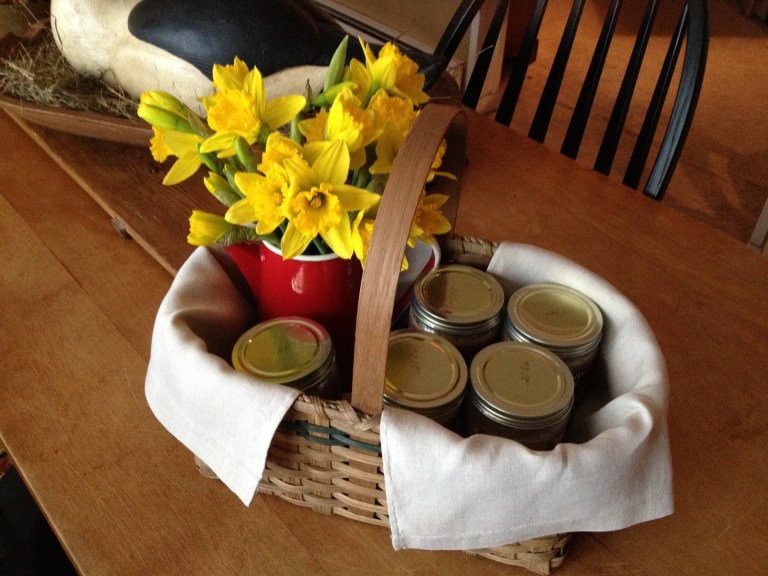
Groundhog Day! Pfft! I’m glad it’s done. It was a busy day at the farm.
Springtime is a state of mind. It is easier to be in that state of mind when you have a vase of bright yellow daffodils on the table.
I surprised Charles with this basket of sunshine and his favorite “Go to” food, Almond Butter. This will last him a while, but there was a time when he was eating over two pounds a week. I can’t imagine, but then I can’t stand the stuff.
Happy Groundhog Day Sweetie!
-
Sewing Machine Legs
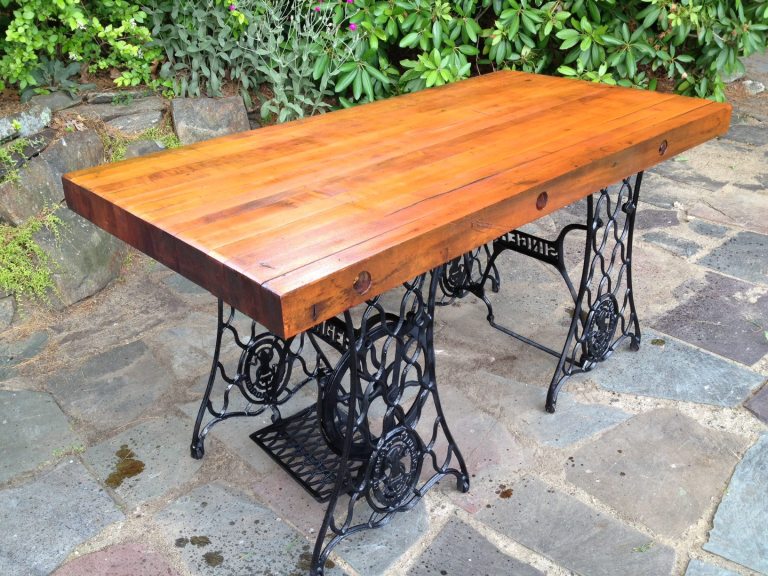
One of my favorite finds are old cast iron sewing machine legs. Most of the these bases tend to be Singer Sewing Machines, which I like because their physical dimensions tend to be the same.
I do have a few odd brands that are fun because they are unique, but it is unlikely that you’ll ever find a matching pair, should you need that.
We have had several complete antique Singer Sewing machines, but the truth is they are worth more cannibalized for parts. The bases are popular and the drawers are often used as well. The heavy sewing head is a relic that few people care to keep around, so they end up in metal recycling.
I picked up these two bases this week. At the time, I thought they were identical, but upon closer inspection, I noticed that the treadle pedal and crank are different. One appears to be much heavier duty than they other.

This base has a slightly different casting for the treadle and the crank arm is a steel rod. 
This base has a rigid iron crank arm, compared to the one pictured above. Differences like this are not a problem. The biggest thing is to ensure that all the cast iron is intact, with no breaks. The next thing, which is relatively common, is to ensure that all four wheels are intact. If not, you will have to shim one uneven leg in some fashion. Also beware of using these on a hard wood floor without some protection, as the iron will dent or scratch wooden surfaces easily.
Table Project
The top photo was taken two summers ago. One day when I was at work at the farm, Charles was on vacation. He simply scrubbed two old bases and painted them with high gloss Rustoleum Paint. He had a six foot long piece of an old work bench for a top. He sanded it just enough to get the roughness out of it. Then he sealed it with three coats of deck sealer, since it stays out year round.
This spring, it will require another sanding, and a couple more coats of sealer and we’ll be good to go for this year. Then again, we’ve enjoyed it, perhaps it’s time to flip it.
Other Ideas
In our kitchen, we have another Sewing Machine base that has a 30-inch round pine top on it. It’s seating for two. We have little cafe-style seating nooks all over the place.

Simple Seating for Two Another place we use these iron bases is by Charles’ barbecue grill. He placed one there, with a polished piece of granite he got from the salvage pile at a local counter shop. He uses it as his prep area for meats and utensils when he’s cooking during the short New England summer.
I’d love to hear what kind of ideas you come up with. Please leave them in the comments below.
If you like this photo and story, please share it with your friends with any of the buttons below.
-
Pie – It’s Not Just For Breakfast
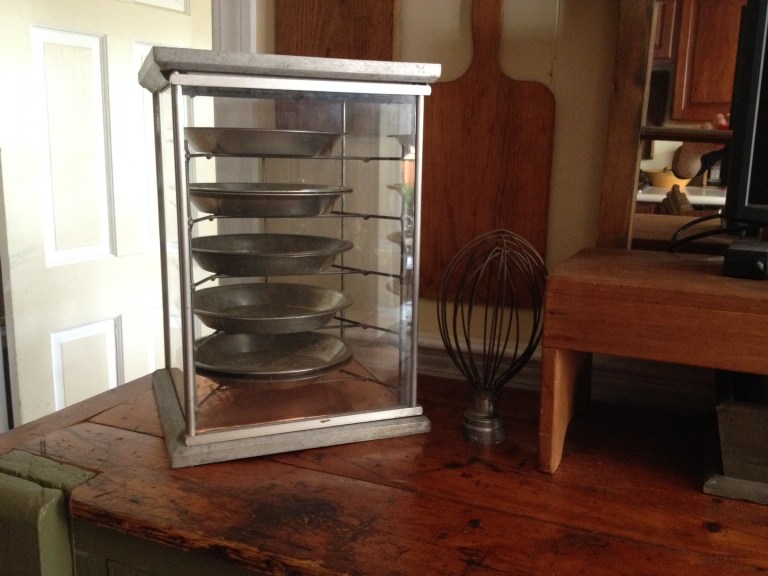
The other day I posted a photo making fun of my darling husband, and his tendency to leave stuff laying around. One of the items in that photo caught the eye of one of his friends, it was the pie rack pictured above.
Local Pie History
This Table Talk Pie Rack is one of my favorite pieces. If you’re a New Englander, you may have grown up with Table Talk Pies. They were the most popular store-bought pie in the region. (No, they do not even come close to homemade, but for some reason, many people think baking a pie is a dark art that they could never master.)
For people who like kitchen or food-related junktiques, Table Talk signs, pie tins, delivery crates and more, are desirable collector items.
This pie rack was typical of what you would see in a local diner decades ago. It was sitting right on the counter, to tempt you into having a slice of pie, as you were sipping your cup o’ joe.
Family History
Charles’ sisters and I all bake decent pies (Charles insists we make “excellent” pies, but I believe the old man is just a little biased). We all are capable of making flaky homemade crusts. We make Canadian Meat Pies, and all kinds of fruit pies, Lemon Meringue pie, and the list goes on. Though we all bake good pies, they are all different, even if they evolved from the same family recipe.
Charles has told me of the many mornings he was working on his Dad’s truck as a boy, when they would stop at a local diner for breakfast. Dad would get bacon and eggs, and little Chuckie would get chocolate milk and a piece of pie.
It’s funny how the everyday items of our childhood can transport us back in time.
-
Winter Sunlight
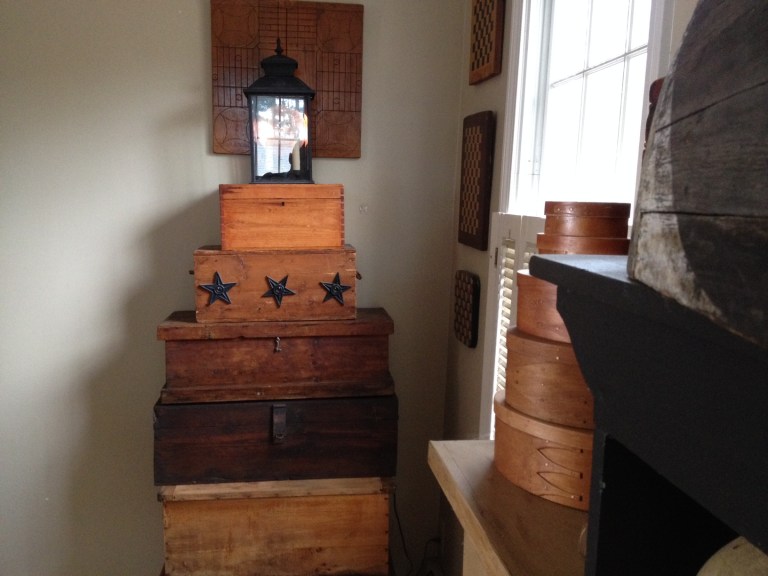
Over the years I have developed an eye for creating appealing displays of old treasures throughout my home. My husband often sees a “car load of junk” transformed as it re-appears somewhere in the cottage. He often describes me as a sculptor of sorts.
On the other hand, I cannot capture my creations on film. Yeah, I know, who uses film? You know what I mean.
Charles knows how to frame a shot. He seldom bothers grabbing my Nikon. He simply reaches in his jeans and pulls out his old iPhone and frames a photo.
If he doesn’t like the light, he’ll come back another time, or even another day. He dislikes flashes, and artificial lighting.
Because of that, some rooms in the cottage do not lend themselves to photos, and others are only good in early morning, or late afternoon.
This photo is at the top of the stairs in the master suite. The winter morning sun is just the right angle to illuminate this spot and to highlight my stack of wooden boxes.
I love how the light captures the subtle differences of the various wood and finishes. And the shadows on the wall create such softness.
If you like this photo and story, please share it with your friends with any of the buttons below.
-
Nature’s Palette

Nature abounds as we look out our back window. Charles and I have lived on the pond for 11 years now. We continue to be mesmerized by how different the view is from day to day.
This week has been a wintry mix, but scenes like this one of the snow patterns upon the black ice make it a joy.
-
Stoneware Week – Day 5
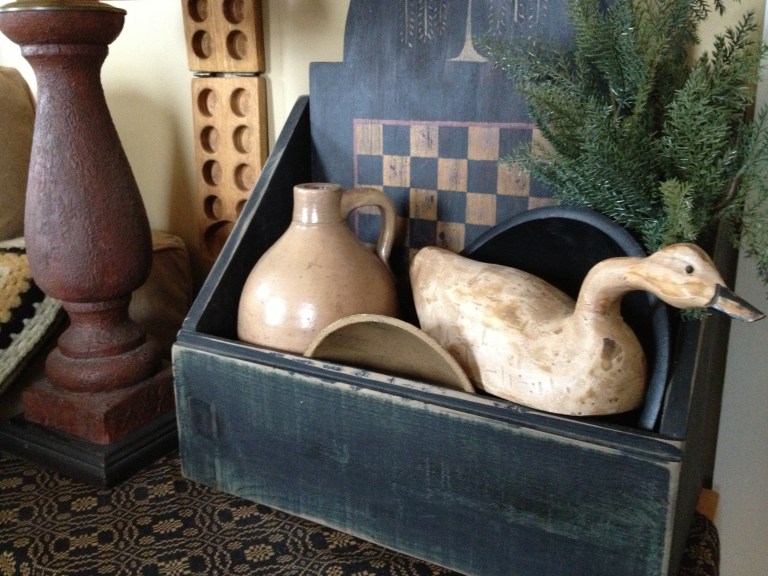

A Stoneware jug complements an assortment of painted wooden wares. Welcome to the final installment of “Stoneware Week”, the second theme week presentation of Suzanne’s Cottage.
Tour
This simple vignette graces a side table in the gathering room. It is winter and game boards are ready. The small swan decoy is all that’s left of our local waterfowl, as all her real friends have departed for warmer climes.
Stoneware
There is nothing particularly unique or special about this simple brown jug. But I loved the soft earth tone, compared to many of the light gray or white ones that I have. When I placed it in this display, I was drawn to the juxtaposition of the round hardness of the vessel compared to the other elements in this box.
-
Stoneware Week – Day 4
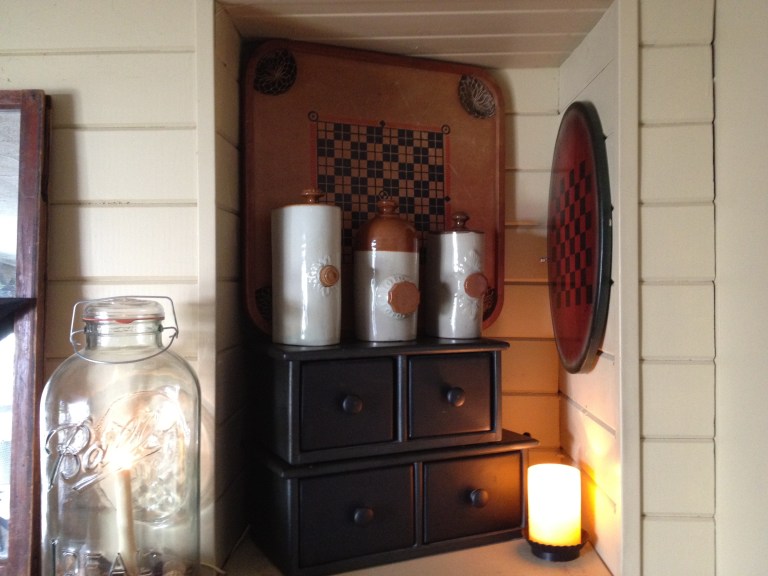
The Tour
When we first moved into the house, this was a gathering room, a few years later, I flipped a couple rooms and this became the dining room. The little alcove sits to the right of Faux Fireplace Number 1 (and Number 5) . There is a matching alcove to the left.
When we bought the house 11 years ago, this room was called “The Saloon”. The previous owner had a bar set up in this room for entertaining and the room was a flamingo pink color. Actually, there was a lot of pink in the cottage. We did our best to eliminate it, but a few remnants remain.
Charles and I do not fancy drinking much, so we saw little need for saloon in the cottage. We tore out the bar and repurposed this entire wall as a focal point for the room. We’re also not tropical in our color palette, so all the tropical colors went south. (FYI – the neighbors all called this the “Florida House”, though we’re in the frigid Northeast.)
Prior to my room flip, Charles had a stereo stacked in the left alcove, and old-style television occupied this spot. Eventually we went with a flat screen and a compact sound system, and these spaces were freed up for my decorating. Yay!
Stoneware
As noted in my previous article, Stoneware Number 2, I mentioned old foot warmers and water bottles. I love the amazing variety and creativity in the design of these old utilitarian items. Though the subject of this article is stoneware, foot warmers were made in an amazing assortment of designs and materials.
I was delighted to find the three featured in the photo above, which all sport the same two-tone color scheme. The past three nights have been in the teens, with tonight’s forecast for single digits, these things could find themselves put back in service.
Actually, since I use them all as display pieces, I’ve never even put water in them. I know the jugs are solid, with no cracks, but I don’t know that I have much faith in the integrity of the stoppers to seal the water in. Actually, I use a buckwheat bag which doesn’t spill and it’s soft and pliable. No one ever called a pottery bottle soft.


